

Understanding China’s Gray Zone Tactics and Their Impact on Offshore Energy
At Teknologam Sdn Bhd, we track security trends that affect offshore energy assets. Gray zone actions create persistent, ambiguous risks for platforms, subsea pipelines, and support vessels. This article explains what these tactics look like, how China applies them at sea, and what operators should do to stay resilient.
Key Takeaways:
- China’s gray zone tactics are shifting the baseline for maritime contestation and access to offshore resources.
- Technical measures—enhanced monitoring, redundancy, and hardened designs—reduce operational vulnerability.
- Companies should expect longer-term geopolitical friction and build policies to sustain safe, continuous operations.
What is the gray zone: definitions and contours
Many stakeholders ask, "what is gray zone" when discussing today’s strategic environment. At its core, the gray zone sits between peace and war. Actors use coercion, ambiguity, and non-kinetic pressure to change facts on the ground without open conflict. For a concise overview of the concept and its strategic importance, see NATO’s discussion of the grey zone and hybrid tactics: Understanding the grey zone (NATO Review).
Stakeholders also search "what is gray zone tactics" to understand specific methods. These tactics rely on plausible deniability, lawfare, economic pressure, and calibrated force. They aim to avoid thresholds that would trigger a formal military response.
We view gray zone risks as operational hazards, not just geopolitical issues. Planning must bridge strategic awareness and day-to-day safety.
China’s maritime approach: patterns and operational tools
china gray zone tactics emphasize layered, persistent presence rather than decisive battles. These methods exploit legal gray areas, maritime law ambiguities, and civilian-front organizations.
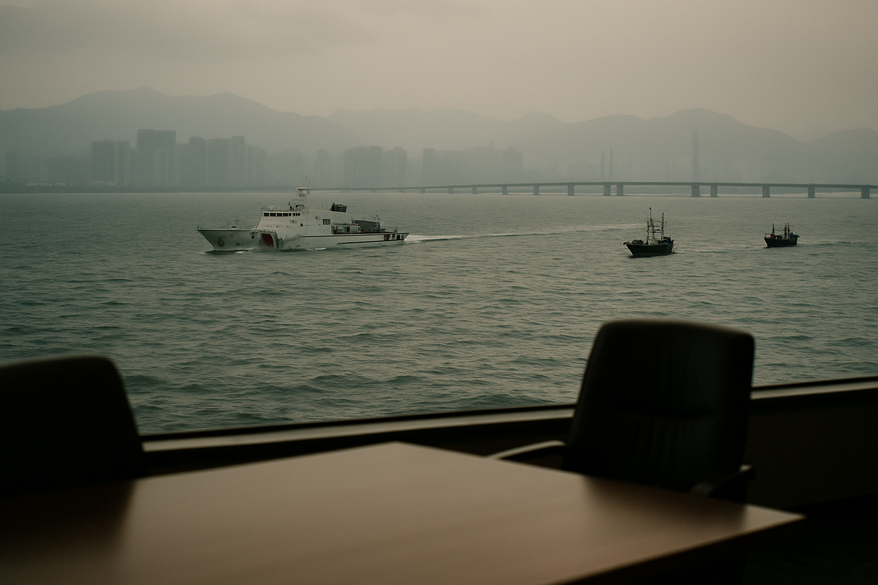
china's maritime gray zone operations commonly deploy coast guard vessels, maritime militia (fishing fleets with dual roles), and administrative claims. They coordinate with state messaging and selective enforcement to normalize new maritime boundaries. For authoritative, operational-level reporting on China’s maritime militia and how it fits into gray zone operations, see the Asia Maritime Transparency Initiative’s analysis: China’s Maritime Militia (CSIS AMTI).
Analysts sometimes describe the resulting ambiguity as "china gray color" on policy maps, reflecting deliberate fuzziness and graduated pressure.
Grey zone tactics examples that affect offshore energy
Here are grey zone tactics examples that directly affect energy operators:
- Use of maritime militia and paid fishing fleets to shadow rigs and lay claims.
- Coast guard shadowing and interdiction under administrative pretexts.
- Selective enforcement or denial of access to Exclusive Economic Zones (EEZs).
- Cyber intrusions targeting SCADA systems and supply-chain platforms.
- Legal and diplomatic pressure to slow or halt project approvals.
Key Insight: Small, persistent actions often have outsized operational impact. They erode norms and increase the cost and complexity of maintaining offshore infrastructure.
Implications for oil and gas operations
Gray zone activity raises several industry-specific risks. It increases the likelihood of harassment or interdiction near critical assets. It complicates logistics and crew changes with regulatory or security delays. It also elevates insurance costs and contractual friction.
Companies must assume that non-military actors can create denial-of-access scenarios. This assumption drives requirements for alternative supply routes, spare parts stockpiles, and remote operational capability.
We approach resilience by treating gray zone indicators as part of our operational risk register. Early warning and contingency planning reduce downtime and reputational exposure.
Practical mitigation: steps for companies and operators
Operators can adopt layered measures to manage risk:
- Conduct geospatial risk mapping of pipelines, platforms, and transit corridors.
- Strengthen physical security and harden digital control systems.
- Build redundancy into logistics and supply chains.
- Formalize liaison protocols with flag states, navies, and insurers.
- Invest in real-time maritime domain awareness and private security partnerships.
- Train crews on de-escalation, documentation, and legal reporting.
Insurance, contract clauses, and local stakeholder engagement complete the toolkit. Legal teams must prepare evidence chains and rapid response plans.
Conclusion: staying operational in a contested maritime environment
Gray zone tactics are now a standard part of maritime competition. For energy companies, the blend of ambiguous coercion and persistent presence poses real operational risks. Teknologam focuses on durable design, robust monitoring, and collaborative risk management to help clients maintain continuity.
If you want a tailored risk assessment for an offshore asset, our team can outline technical measures and response plans aligned with your operating environment.