

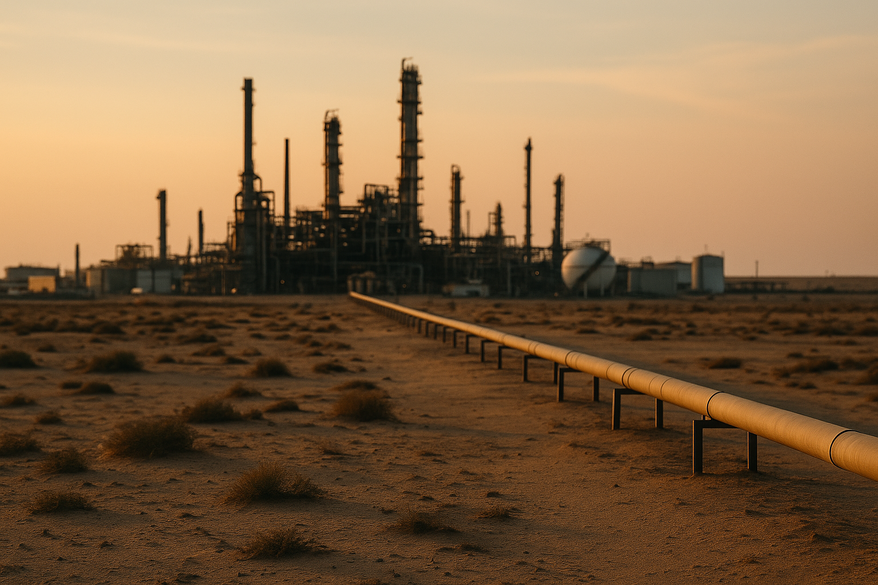
Strategic analysis: Libya’s $20bn, 25-year energy agreement and industry implications
Teknologam tracks major upstream deals closely because they shape equipment demand, project schedules, and local supply-chain opportunities. Recent reporting around a landmark pact has direct relevance to our fabrication and services planning. This analysis places the agreement in commercial, technical, and operational context that matters to manufacturers in the oil and gas value chain.
Key Takeaways:
- Libya’s new pact signals a major shift in long-term upstream investment and production planning.
- The agreement accelerates requirements for midstream infrastructure and project execution capacity.
- Teknologam should prepare to support increased demand for specialized equipment and localized services.
What the headlines say and why they matter
Multiple outlets ran headlines such as "libya signs $20 billion oil deal with totalenergies and …" and similar variants. Those reports describe a long-term commercial framework reportedly involving major US and French firms. We treat early coverage as directional intelligence pending full contract texts and regulatory approvals.
We view the announcement as a market signal that Libya seeks predictable, long-term partnerships to stabilize production and fund development.
The phrase "libya signs 25-year oil deal with totalenergies, …" highlights the duration negotiators reportedly agreed. A 25-year horizon alters project economics, shifting emphasis from short-term outputs to long-life asset reliability and maintenance strategies.
Context note: Libya's role in regional oil production and export capacity makes multi-decade agreements strategically significant for markets and for suppliers planning long-lead manufacturing and logistics. For background on Libya's energy profile and production dynamics, see the U.S. Energy Information Administration country overview: Libya - Country Analysis Brief (EIA).
Deal structure: reported scope and timelines
Public summaries emphasize upfront investment and extended production sharing. Headlines such as "libya announces $20 billion energy deal with …" suggest a staged capital deployment, blending exploration, redevelopment, and export-capacity work over a 25-year term.
- Staged capital injections across exploration, development, and infrastructure phases
- Emphasis on field redevelopment and export capacity expansion
- Potential local content and service-integration clauses
A multi-decade engagement implies continuous procurement cycles and recurring supply opportunities. For manufacturers like us, that translates into predictable order pipelines if local content rules favor domestic supply.
Key Insight: Long-term deals shift procurement from one-off packages to multi-year framework agreements, which reward suppliers that can deliver consistent quality and scalable capacity.
Technical and operational implications
A $20 billion program usually includes platform upgrades, pipeline rehabilitation, and processing facility expansions. The headline "libya oil deal: totalenergies & conocophillips $20b pact" frames the partnership as technically deep, combining technical strengths across operators.
Planned activities commonly include reservoir appraisal drills, enhanced oil recovery pilots, and brownfield facility modernization. Each activity demands bespoke equipment, high-integrity steelwork, and precision engineering — core capabilities for specialized manufacturers.
Operational priorities and likely equipment demand:
- Increased demand for pressure vessels, separators, and skid-mounted packages.
- Surge in requirements for corrosion-resistant materials and advanced welding expertise.
- Need for rapid fabrication turnaround and on-time delivery to tight offshore schedules.
Standards and QA: Supplying pressure vessels and high-integrity equipment into multinational operator projects will require adherence to internationally recognized codes and traceability systems (for example, ASME pressure-vessel codes and related certification regimes). See ASME guidance on pressure vessel standards and compliance for supplier requirements: ASME BPVC Section VIII — Pressure Vessels.
Commercial and geopolitical lenses
Reports titled "libya signs 25-year oil deal with totalenergies and …" and "$20bn, 25-year deal: us and french firms back libya's …" underline multinational backing, which reduces single-company risk but introduces geopolitical considerations. International partners bring finance, technology transfer, and governance expectations.
Multinational participation can streamline financing but raises scrutiny on procurement transparency and compliance.
For suppliers, geopolitical clarity supports long-lead procurement; uncertainty increases demand for flexible contracting and risk-mitigation clauses. Anticipate stronger due-diligence, sanctions screening, and compliance requirements from international operators and financiers.
What this means for Teknologam and the supply chain
Assuming contracting proceeds, we expect measurable increases in enquiries for fabricated modules and subsea-related structures. Local content commitments could open partnerships with Libyan fabricators and service firms, enabling joint-venture opportunities.
- Target bid preparation for brownfield upgrade packages within the next 12–36 months
- Assess capacity to supply API/ASME-compliant pressure vessels and large-diameter pipe spools
- Strengthen QA/QC, material traceability, and export logistics to meet multinational operator standards
Preparing now positions Teknologam to compete for sustained supply scopes, rather than fragmented, short-term orders.
Key Insight: Early engagement with operator EPC teams and local stakeholders secures preferred supplier status in framework agreements.
Risks and uncertainties to monitor
Public headlines such as "libya announces $20 billion energy deal with …" reflect initial announcements, not detailed contracts. Key uncertainties remain: exact fiscal terms, force majeure clauses, security arrangements, and the timeline for regulatory approval.
- Contractual clarity on price escalation, scope changes, and dispute resolution.
- On-the-ground security and logistics that affect transport and construction windows.
- Enforcement of local content requirements and vendor pre-qualification processes.
We recommend continuous monitoring and readiness to adapt proposals to evolving operator requirements.
Next steps for Teknologam
We will prioritize three actions to capture potential opportunities from the reported agreement: deepen technical dialogue with partners, validate capacity for large-diameter fabrication, and align QA systems with international operator standards.
Proactive, compliant, and technically credible engagement will turn headline momentum into real contracts for suppliers.
Concluding, the cluster of headlines — from "libya signs $20 billion oil deal with totalenergies and …" to "libya oil deal: totalenergies & conocophillips $20b pact" — signals a material investment window. For Teknologam, that window presents sustained demand if we act now to align capabilities, partnerships, and compliance frameworks.