

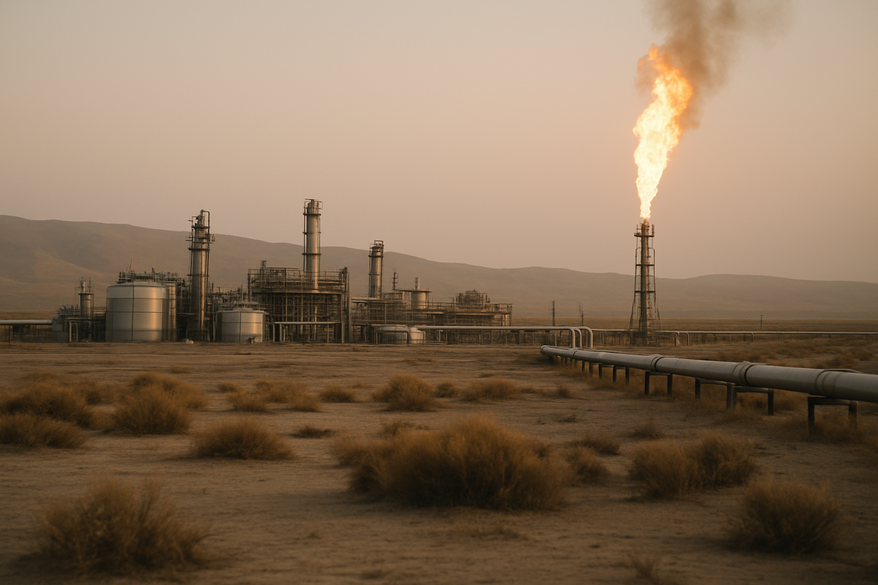
Turkmen gas milestone and shifting upstream dynamics: what it means for suppliers
Teknologam watches regional upstream moves closely because they shape equipment demand and service scopes. Recent announcements around Turkmenistan and broader Gulf partnerships highlight a strategic pivot toward gas production and long‑term field development. Our team sees opportunity in supplying reliable surface and subsea systems as operators expand gas portfolios and secure production terms.
Key Takeaways:
- Petronas' renewed commitments in Turkmenistan and related protocols signal a sizable new phase in Central Asian gas development.
- Technical focus will shift toward long‑life production equipment, gas‑handling systems, and integrity management for aging fields.
- For Teknologam, these deals reinforce demand for modular, low‑maintenance production skid solutions and turnkey fabrication.
What happened in Turkmenistan and why it matters
The region has seen high‑level agreements that set production expectations and investment frameworks. Public reports note that Petronas has signed a major gas production deal in Turkmenistan, aiming to ramp sustainable output and secure long‑term supply. Concurrently, Turkmenneft and Petronas have formalized protocols on commercial terms and cooperation.
- Operators commit to phased CAPEX that prioritizes initial production, then expansion.
- Contractors must provide scalable packages to match phased development.
- Local content and equipment certification will influence vendor selection.
"Long‑term production deals reduce project risk and change procurement timelines," says a Teknologam project director. "We adjust fabrication schedules and inventory planning accordingly."
Technical priorities and supply‑chain implications
Field development focused on gas alters technical requirements. Companies will require compression, dehydration, and sulphur management systems designed for continuous operation. Petronas’ engineering leads will likely specify robust metering and custody‑transfer systems, plus enhanced corrosion protection.
Key Insight: Standardizing modular skids speeds deployment and lowers lifecycle costs, especially in remote Central Asian environments.
These technical shifts favor vendors who can deliver certified, pre‑commissioned units. Teknologam’s modular production skids and ASME‑compliant pressure vessels align with such needs; adherence to recognized code requirements is increasingly important for procurement and safety verification (ASME Boiler and Pressure Vessel Code (BPVC)). Operators also intensify integrity management, requiring inline inspection readiness and provisions for pigging and continuous monitoring.
Regional and global positioning: competition and partnership
Broader industry moves show an appetite for gas and longer‑term supply commitments, which in turn influence investment in pipelines and LNG infrastructure (IEA – Natural gas overview). Headlines suggest Petronas is strengthening its global upstream position while other national companies expand their gas portfolios.
- Companies pursue assets that balance portfolio gas‑to‑liquids ratios.
- Strategic deals lock in supply routes and influence pipeline and LNG investment.
- Vendors must be agile to serve diverse contracting models across jurisdictions.
These portfolio expansions increase demand for cross‑border logistics expertise and local fabrication partnerships. For suppliers, the timeline and contract packaging dictate fabrication hubs, shipping windows, and site support plans.
Teknologam’s practical response and opportunities
We translate long‑term contracts into production planning adjustments. With Petronas marking extended operational horizons in Turkmenistan, our shop prioritizes long‑lead items and spares provisioning. We also align QA processes with client specifications and national standards.
- Increase inventory of corrosion‑resistant alloys and specialty seals.
- Offer pre‑commissioned modular units to reduce field installation time.
- Enhance after‑sales service agreements focused on uptime and integrity.
Our engineering team views these deals as a call to refine modular designs for harsh climates and extended maintenance intervals.
Contract terms, local engagement, and risk management
Contract protocols like the Turkmenneft–Petronas agreements shape local content and commercial terms. Local content requirements will affect subcontracting and onsite services. We advise clients to validate logistics, customs, and certification timelines early.
Key Insight: Early engagement on local content and commissioning requirements prevents schedule slippage and cost overruns.
Risk mitigation includes adaptive supply chains and contingency inventories. Where continued operator presence suggests multi‑year work profiles, suppliers can justify investments in local partnerships, training, and modest fabrication capacity in the region.
Conclusion: practical outlook for suppliers
Major upstream deals in Turkmenistan and global gas portfolio moves change procurement horizons. The Petronas agreement in Turkmenistan signals stable, multi‑year demand for durable gas‑production equipment, while other global moves maintain competitive pressure that rewards reliable vendors.
Teknologam stands ready to support these programs with modular, certified equipment and responsive service. We will continue aligning fabrication capacity and field support to meet evolving operator requirements.