

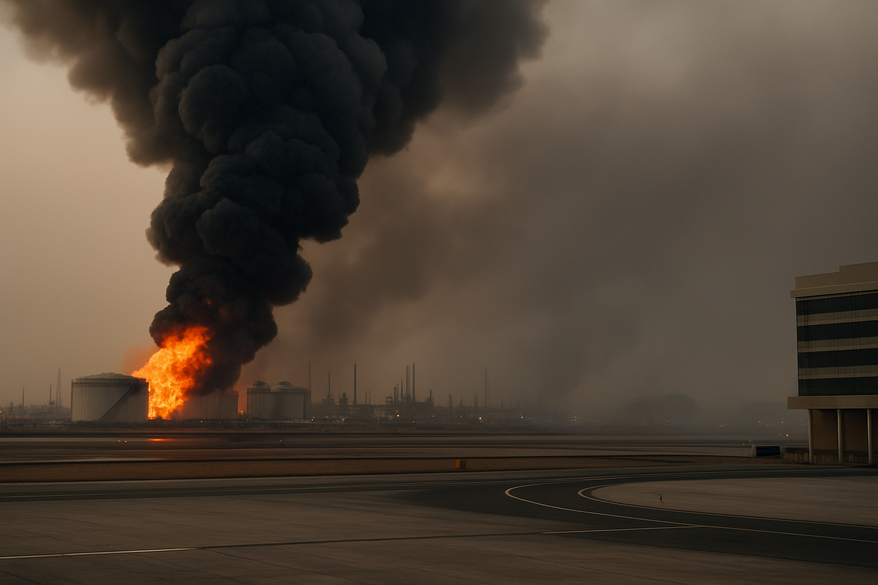
Incident overview and implications for Gulf energy operations
Teknologam has monitored recent reports and satellite imagery closely after a series of dramatic attacks near Gulf energy hubs. We recognize the operational and safety challenges these events create for regional operators and equipment suppliers. Our perspective combines field experience with supply‑chain visibility to assess immediate risks and practical mitigations. Below we outline facts, impacts, and suggested next steps for operators and vendors.
Key takeaways
- Iran‑linked strikes have escalated regional operational risk and may affect crude flows.
- Technical systems, terminal integrity, and marine fuel logistics face heightened exposure.
- Companies should accelerate contingency plans and review emergency response capabilities.
What happened: sequence and scope
Multiple news outlets and on‑the‑ground accounts reported large fires and damage at Gulf energy sites and nearby infrastructure. Eyewitness and surveillance footage showed smoke plumes near Fujairah and reports described conflagrations close to Dubai airport. Headlines such as "iran hits gulf neighbours and keeps stranglehold on oil …" circulated as analysts connected attacks to broader geopolitical pressure.
Investigations indicate Iranian‑style drone or missile strikes targeted tankers, terminals, and storage areas. Early reports referenced "smoke seen rising from direction of uae energy facility, dubai airport burns? iranian drone strikes fuel tanker near …" The rapid sequence raised immediate concerns about cascading damage to terminal systems and nearby civil infrastructure.
We treat every regional incident as a compound operational hazard: asset damage, personnel safety risk, and supply‑chain disruption.
Immediate operational impacts
Physical damage to jetties, storage tanks, and pipelines can halt loading and unloading operations within hours. Fire damage to electrical and instrument systems often causes prolonged outages and complex repair scopes. Operators reported fires at a "major uae oil terminal in flames hours after us strikes …" and significant disruption to marine traffic near Fujairah.
Marine fuel logistics became precarious after an "iran strike on uae's fujairah port oil terminal triggers huge …" blaze. Insurance restrictions, port authority controls, and salvage operations typically slow restart timelines. These effects translate into short‑term availability constraints for crude and refined products and can force rerouting of cargoes.
Key operational priorities for initial assessments
- Rapidly confirm structural integrity of jetties and berths.
- Inspect tank walls, roofs, and foundations for heat or impact damage.
- Check cathodic protection and containment systems to prevent secondary failures.
- Verify power and control system status before any restart.
Key insight: Rapid damage assessments must prioritize pipeline integrity, tank floor and roof stability, and cathodic protection status to prevent secondary failures.
Supply‑chain and market implications
Disruption in the Gulf can tighten markets quickly. Traders and refiners react to terminal outages and reroute cargoes, pushing tanker rates and regional fuel prices higher. The incident stream labeled "live | massive fire breaks out near dubai airport after iranian …" fed short‑term market nervousness and contingency cargoing.
For manufacturers and vendors, delayed deliveries and diverted shipments increase lead times. Equipment producers should expect expedited repair demands for valves, pumps, and fire‑suppression systems. Teknologam recommends pre‑positioning critical spares and verifying alternate logistics corridors.
Recommended supply‑chain actions
- Prioritize spare‑part kits for critical pump and valve assemblies.
- Validate availability of certified welding and structural repair crews.
- Confirm marine‑service providers for rapid dewatering, salvage, and towage support.
For market context and how supply interruptions can ripple through global prices and flows, see the U.S. Energy Information Administration Short‑Term Energy Outlook.
Safety, regulatory, and contractual considerations
Operators must follow safety protocols and regulatory reporting when facilities sustain attack‑related damage. Environmental releases may trigger cross‑border obligations and costly remediation. Contractual force majeure clauses might apply, but companies should document events and mitigation steps meticulously.
We advise reviewing emergency response plans, verifying crew rotation and sheltering policies, and coordinating with insurers early. Where facilities sit close to airports or civilian zones, coordinate with civil aviation and port authorities for public‑safety messaging and access control. For guidance on port and maritime security coordination, consult the International Maritime Organization’s maritime security resources.
Safety first: no restart decision should bypass a full structural and integrity verification by qualified inspectors.
Practical steps for operators and suppliers
Companies should take a structured approach to resilience and recovery. Start with rapid risk triage, then sequence repairs by criticality. Teknologam suggests a three‑tier checklist to guide immediate actions and procurement:
- Safety assessment: confirm no remaining hazards to personnel or responders.
- Integrity checks: inspect tanks, piping, electrical systems, and structural supports.
- Recovery logistics: arrange spares, cranes, and certified contractors for repairs.
Key operational tips
- Maintain a live inventory of critical spares and service‑provider contacts to reduce repair lead times after an incident.
- Pre‑award emergency service agreements with vetted contractors to accelerate mobilization.
- Use drone and remote sensing to accelerate initial structural and thermal assessments while minimizing personnel exposure.
Our outlook and recommended posture
Regional instability can recur; companies must embed resilience into operations. Teknologam will prioritize rapid‑response kits, surge manufacturing capacity, and field engineering support for clients. We also recommend operators adopt redundant monitoring and remote shut‑off capabilities for terminals.
Reports like "iran hits gulf neighbours and keeps stranglehold on oil …" and "major uae oil terminal in flames hours after us strikes …" underscore the real‑world consequences for infrastructure and supply chains. We view this as a call to strengthen emergency preparedness across the industry.
Action items to consider now
- Review supplier contracts for emergency prioritization and lead‑time guarantees.
- Test emergency response plans annually with live drills and third‑party observers.
- Invest in redundant telemetry, remote isolation systems, and rapid‑deploy containment kits.
If you would like, Teknologam can provide a tailored continuity assessment for specific terminals or upstream facilities.