

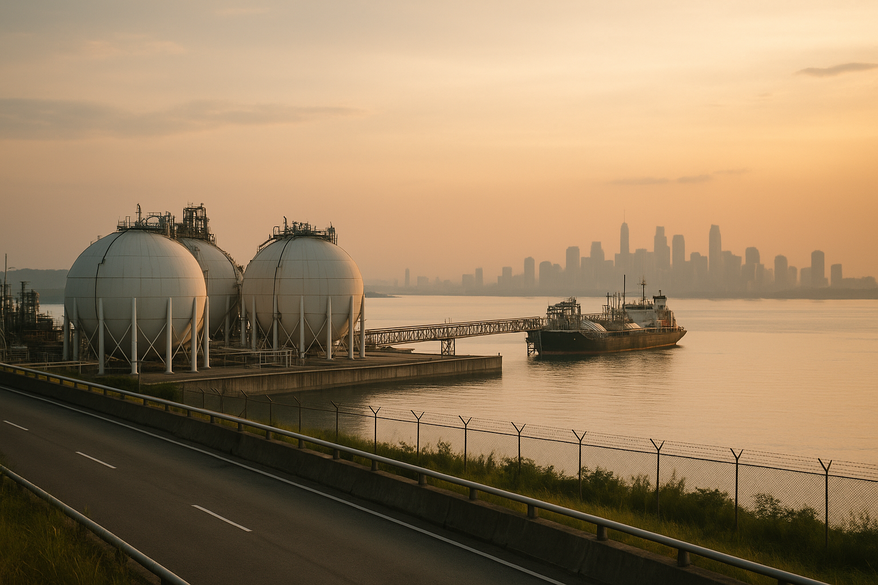
Strategic partnership advances Malaysia’s LNG regasification capacity
Teknologam follows industry shifts closely, especially moves that affect regional LNG infrastructure and contracting pipelines. The recently announced collaboration positions local and international players to expand regasification capacity in Malaysia. Our team sees practical opportunities for equipment supply, modular solutions, and phased commissioning support.
Key Takeaways:
- Gas Malaysia and Tokyo Gas form a strategic partnership to expand regasification capacity.
- Technical scope includes terminal construction, storage integration, and VTTI involvement on operations.
- The collaboration can accelerate demand for local fabrication, modular skids, and specialist pipeline connections.
Deal overview and parties involved
Gas Malaysia recently confirmed formal steps that align with longer-term energy security objectives. According to press notices, Gas Malaysia has signed an agreement with Tokyo Gas to study and build LNG handling assets. The arrangement pairs Gas Malaysia’s local network knowledge with Tokyo Gas’s market and technical experience.
The announcement also noted the inclusion of a storage and terminal operator. This combination aims to create a commercially viable import and regasification hub for peninsular supplies. Early project phases will focus on site selection, environmental permitting, and civil and mechanical scopes.
Key near-term points:
- EPC contractors: domestic and international bids anticipated
- Timeline: feasibility, FEED, then phased construction
- Offtake: blended of industry and power-sector demand
Technical scope, VTTI’s role, and project mechanics
Project briefs reference VTTI for regasification terminal storage operations and commercial management. The documents describe VTTI providing jetty interface design, tank integration, and operations know‑how. VTTI’s participation complements Tokyo Gas’s regasification expertise and Gas Malaysia’s distribution network.
Key technical elements will include marine works, cryogenic pipework, vaporizers, and safety systems. The terminal design must meet local HSE standards and allow future capacity uprates. Pre‑fabricated modules and standardised skids reduce onshore construction risk and shorten commissioning time. For a concise primer on the equipment and functions that make up LNG import and regasification facilities, see the U.S. Energy Information Administration’s overview of liquefied natural gas infrastructure: LNG basics and terminal functions.
Operational approach and risk control:
- Early supplier involvement to de‑risk technical interfaces
- Modularisation to compress schedule and limit heavy onshore works
- Standardised interconnection and metering specifications to reduce commissioning iterations
We view modularisation and early supplier involvement as central to controlling cost and schedule for complex regasification projects.
Commercial implications and market context
The partnership aims to diversify gas supply sources and strengthen grid resilience. Public statements—where Gas Malaysia said the collaboration is aimed at enhancing security of supply—reflect a strategic response to regional demand volatility. Market participants can expect clearer signals on long‑term capacity bookings and potential merchant storage offerings.
A new import and regasification hub in Peninsular Malaysia would contribute to regional LNG flexibility and trading liquidity. For context on how LNG infrastructure supports energy security and market dynamics globally, see the International Energy Agency’s analysis of LNG’s role in secure, lower‑carbon energy systems: The role of LNG in a secure and lower‑carbon energy system.
Commercial considerations:
- Offtake frameworks (firm vs merchant) will determine revenue stability
- Storage operator involvement can enable merchant or seasonal services
- Multi‑stakeholder governance typically improves bankability and project resilience
Key Insight: Early coordination on interconnection specifications and metering standards reduces commissioning iterations and protects commercial flows.
Opportunities for Teknologam and local industry
For Teknologam, the project creates near‑term demand for pressure vessels, cryogenic piping spools, and specialised supports. Our manufacturing footprint and fabrication standards align with typical regasification equipment requirements. We can support FEED‑stage mockups, skid fabrication, and site‑installed balance‑of‑plant work.
Actionable supplier plays:
- Offer FEED‑stage pre‑qualification and mockup services to EPCs
- Propose modular skid packages for vaporizers, pumping, and metering
- Prepare training and commissioning support packages for local operations teams
Partnering with EPCs and offering pre‑qualification packages positions us near the front of the supply chain. We also anticipate scope for localized training and commissioning assistance, given the project’s focus on operational readiness.
Next steps and what stakeholders should watch
Stakeholders should monitor formal FEED awards, environmental approvals, and offtake tender timelines. Detailed studies will disclose final capacities, berth details, and construction phasing. Market actors should also watch financing arrangements and any sovereign or concessional support.
Gas Malaysia’s partnership with Tokyo Gas and the inclusion of a Netherlands‑based storage specialist indicate a blended commercial and operational model. As this program moves from concept to contract, Teknologam stands ready to support technical packages and supply critical fabrication deliverables.