

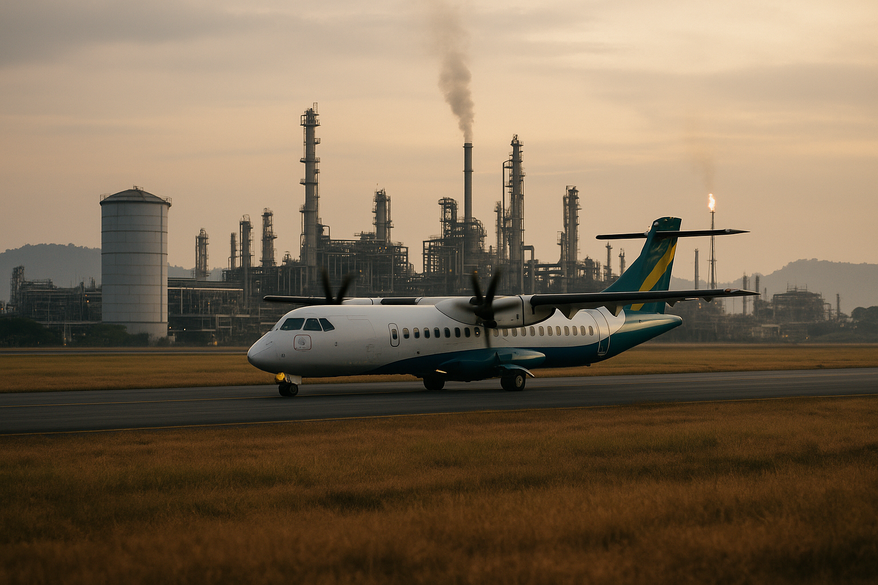
Strategic implications of AirBorneo’s MasWings acquisition and fuel supply choices
Teknologam follows regional aviation developments closely because they affect fuel logistics and downstream equipment demand. Sarawak’s move to fold MasWings into a state-owned carrier creates new procurement and infrastructure needs. We assess how fuel supply choices and regulatory scrutiny will shape opportunities for suppliers and service providers.
Key Takeaways:
- Sarawak’s consolidation shifts commercial risk and creates a single buyer with scale for aviation fuel.
- Technical focus will center on fuel quality, storage, and reliable off-take contracts to support thin regional routes.
- Suppliers and manufacturers can win work supplying fuel handling, filtration and metering if they align with state procurement timelines.
Context: consolidation and immediate priorities
Sarawak has completed the MasWings acquisition and placed aviation operations under a Sarawak-owned structure. That consolidation aims to preserve rural air connectivity while centralizing procurement. The new entity, AirBorneo, will run MasWings and faces two near-term priorities: securing reliable fuel and integrating line maintenance.
The acquisition accelerates decisions about fuel contracts and infrastructure, including storage capacity near rural aerodromes. AirBorneo moves from a fragmented procurement posture to a coordinated buyer with potential leverage over suppliers and contractors.
“We view the acquisition as a catalyst for upstream suppliers to align capacities with Sarawak’s regional timelines,” says a Teknologam operations lead.
Fuel supply options: national versus state suppliers
Reports indicate AirBorneo is weighing fuel supply contracts with major oil companies and evaluating deals with both Petronas and Petros. The carrier must balance price, continuity, and sovereign interest.
Key technical considerations:
- Consistent fuel quality across remote aerodromes to avoid engine contamination or APU issues — this requires clear quality controls and inspection regimes informed by industry best practice, such as IATA guidance on fuel quality and handling. IATA guidance on aviation fuel quality and handling
- Measured and certified storage that minimizes microbial growth and water entrainment
- Delivery cadence aligned with thin route economics and variable load factors
Priority contract and technical features:
Prioritize compliance with recognized fuel specifications (e.g., ASTM jet-fuel standards)
Require sealed, monitored tankage with filtration and microbial-control measures
Contractual clauses for force majeure, inventory replenishment, and emergency response
Prioritize ASTM D1655 jet fuel specification
Require sealed, monitored tankage with filtration
Contractual clauses for force majeure and inventory replenishment
Regulatory and political signals
Dato Sri Lee Kim Shin said the government will study transition mechanisms that could support a smooth handover and fair procurement. That review could influence preferential sourcing, regulatory approvals, or co-investment in infrastructure.
Key insight: Government scrutiny can lengthen procurement timelines but may also create funded infrastructure projects that reduce the airline’s upfront capital burden.
Regulatory choices will affect commercial terms. If state suppliers like Petros receive preference, pricing may reflect broader policy goals rather than purely market rates. Conversely, preferential contracting with national suppliers such as Petronas could simplify logistics at primary hubs and existing fuel supply chains.
Operational integration: storage, logistics, and timelines
Operationally, AirBorneo requires a phased rollout of fuel handling upgrades at feeder airports. Typical upgrades include bonded storage, pump skids, fuel quality testing kits, and training for refuelling crews.
- Phase 1: audit existing depot and apron infrastructure to identify contamination risks, measured tankage shortfalls, and handling gaps.
- Phase 2: install modular storage and filtration systems that can be deployed rapidly to remote strips.
- Phase 3: implement fuel management software, remote monitoring, and reconciliation tools for auditability.
From a supplier perspective, signals that AirBorneo will seek fuel supply contracts mean procurement notices are likely in the near term. Suppliers should prepare proposals with clear lead times, compliance documentation, and emergency-response plans.
Implications for manufacturers and service providers
For Teknologam and similar manufacturers, the transition presents clear workstreams. Demand will rise for:
- Packaged fuel filtration and microbial-control systems
- Metering and reconciliation equipment for tight audit trails
- Portable containment and rapid-refill solutions for remote strips
We recommend suppliers present modular, scalable solutions that reduce upfront capital and allow quick deployment. Offer maintenance contracts aligned with route seasonality and satellite monitoring to assure continuous fuel quality.
“Winning these projects requires demonstrating both technical compliance and an ability to support remote operations,” notes our field engineer.
Conclusion: positioning for the next steps
AirBorneo’s fuel-supply decisions will set the procurement landscape for years. If the government follows the review Dato Sri Lee Kim Shin referenced, suppliers should expect clearer procurement rules and potential infrastructure support.
Teknologam will monitor tender windows and engage early with procurement teams. We see opportunities to deliver compliant fuel-handling systems that reduce operational risk and support Sarawak’s regional connectivity goals. Suppliers who can demonstrate standards compliance, remote support capability, and rapid deployment options will be best positioned to win work.